This article by Leo Gamble adds to his comprehensive coverage of Mentone’s history in his book, Mentone Through the Years. In this article he discusses issues that have arisen in Mentone since the year 2000 and relates them to earlier events in the district, including the rise of multi-level apartments, the change in the character of the Mentone shopping precinct and the developments in secondary education.
Leo Gamble completes his story of the Friends of the Mentone Station Gardens with ‘Winning More Friends’. There he takes the story up to 2018, noting the developments of the gardens, the actions to prevent the building of six storey apartments overlooking the railway line, the grand sausage sizzle of 2014, and the new concerns associated with the crossing removal at Balcombe Road, Mentone.
Leo Gamble writes of the origins of the Friends of Mentone Station Gardens and when the gardens existence was threatened by a proposal to create a transport interchange. Politicians became involved and questions were asked in parliament, local residents rallied to fight for the preservation of trees and gardens at Mentone station and worked to enhance the station precinct.
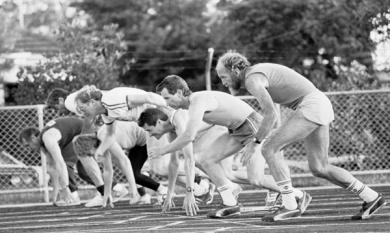
Leo Gamble tells of how a swampy area in Mentone, prone to flooding, was converted into an athletics training track and why it was named Dolamore. It was where, in 1965, Ron Clarke ran a world record for the ten mile event, completing the run in 47 minutes 12.8 seconds. Today it continues to be the home of the Mentone Little Athletics Club, the Mentone Athletics Club, and the Mentone Masters,.
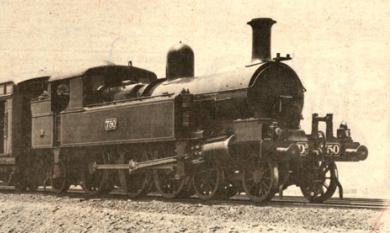
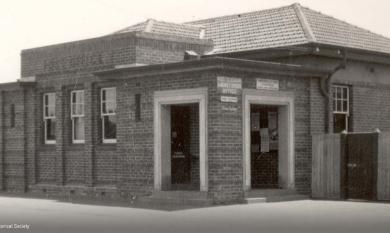
Leo Gamble tells of the early years of the Mentone Station, the creation of the subway, fire and tragedy, and the arrival of electric trains. Can you remember the ‘red rattlers’?
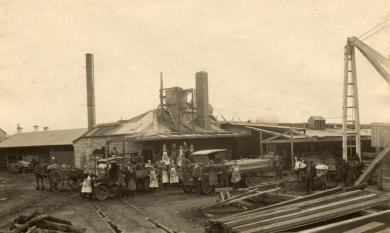
Leo Gamble writes of a railway siding that no longer exists at Mentone Station. It was a focus of attention for several businesses, where materials like coal, briquettes, and building supplies were delivered. It was from this siding that a spur into Caudwell’s timber yard and joinery was constructed in 1913, and trains bringing spectators to race meetings were parked.
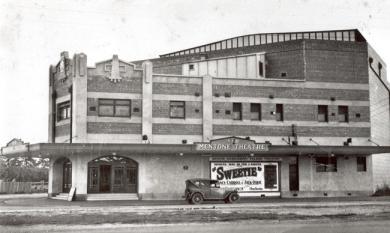
Leo Gamble writes of the tussle between Mordialloc Council and Albert Lydford in his desire to build a grand theatre at Mentone. It was finally built on the corner of Point Nepean Road and Balcombe Road in 1928. He built other properties in Mentone but his entrepreneurial activities ceased when he became financially bankrupt after the Great Depression. He died at his home at 60 Balcombe Road Mentone in 1946.
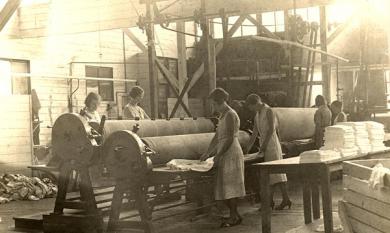
Leo Gamble recalls the sound of the hooter at Prince’s Laundry that announced the commencement and conclusion of the days work. Founded in 1905, the laundry provided work for local people, served the needs of local hospitals and guest houses which attracted visitors to the district. By 2005 it employed 400 staff and processed 25 million kilos of linen each year.
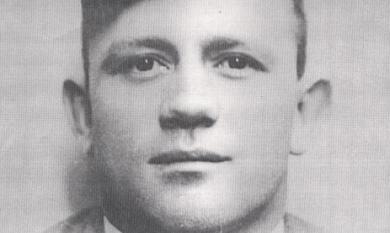
Dick Garrard had an outstanding record as a wrestler representing Australia in three Olympic Games. Between 1926 and 1956, he competed in 526 bouts and only lost 9. Leo Gamble writes of Garrard visiting Mordialloc where he had family connections, and taking part in St Bede’s money raising events at Mentone City Hall.
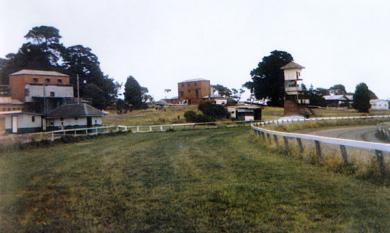
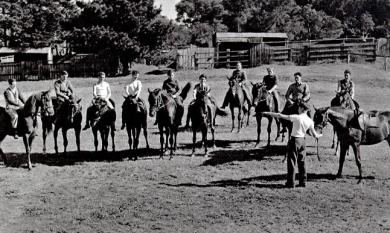
Leo Gamble writes of Jack Purtell, a Mentone boy, who was a very successful jockey in Victoria and overseas and who rode three Melbourne Cup winners. Jack served his apprenticeship at the Ted Temby stables and went on to win seven jockey premierships. Some of the horses he rode were Hiraji, Toryboy, Baghdad Note, Wodallo, Silver Knight and Rising Fast. He was one of the outstanding figures in Australian turf history.
Leo Gamble tells of Nancye Wynne Bolton, an Australian tennis champion and a one time resident of Mentone. Nancye showed her talent early as a young girl in tournaments at Mentone in the 1930s. By 1938 she qualified to play in the USA Championships and was rated among the top ten female players in the world. She eventually won eleven Australian Championships. Later, in the early 1950s, she made her mark in club competitions in golf.
Leo Gamble writes of the development of the Cheltenham Catholic Parish, the priests who served there and parishioners who worked in the growth of the school. Two long serving priests were Father Bracken and Father Martin.
Early in 1927 Fred Hoysted , a race horse trainer moved his family from Wangaratta to Mentone. He became a leading metropolitan trainer. Two of his sons also became trainers. Bob for a time worked for his father. Bob and brother Bon took over the business in the mid-1960s. From 1985 till 1997 Bob was president of the Australian Trainers Association working to improve the industry.
Curl a Mentone boy was a real pest. Often engaged in annoying activities, cadging kicks, selling golf balls with suspect origins, pestering the ice man for a lump to suck and making farting noises at solemn moments. But race days were best. He sold pencils to race goers at a ridiculous mark up and making money selling papers. Not a bad Day!
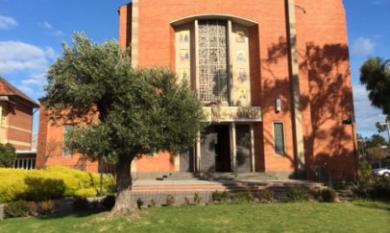
The olive tree in the front of St Patrick’s Church appeared to be dying during the long droughts of the early 2000s Its survival seemed doubtful in 2012 when the drought broke. But it is still there today looking a little worn being well over a hundred years old.
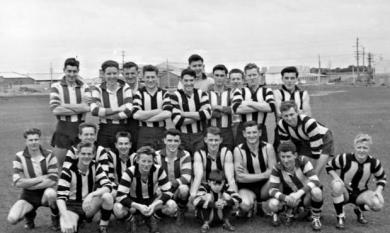
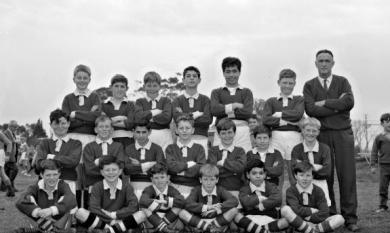
Mentone CYMS Football Team - Standing Left to Right - John Alford, Laurie O'Toole, Terry Kelly, Ray Walsh, Paul Bayard, Peter Renkin, Peter Smith, Dick Bloink, George Minter, George Mikolajunus Squatting at Front - Brian Yurisich, John Avery, Peter Blake, Tony Campesato, Peter Shoppee, Ray O'Toole (Vice Captain), Leo Gamble (Captain/coach), Des Kelly, Graeme Weston, John Ragg (Half Standing) Peter Norton.

![Leo Gamble, Laurie O'Toole and Neil Pickles (Curl) playing cricket in Gamble's backyard [picture].](https://localhistory.kingston.vic.gov.au/sites/default/files/styles/modal_image/public/photos/620_1.jpg?itok=ttoJzcYP)
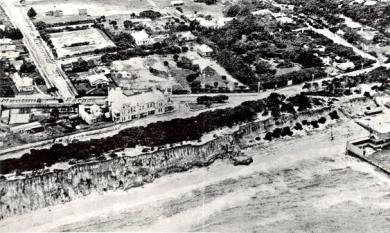
![Aerial view of Thomas McCristal's property, later St Bede's, c1920 [picture].](https://localhistory.kingston.vic.gov.au/sites/default/files/styles/modal_image/public/photos/K000030_612_1.jpg?itok=iTz28z6M)
![Brothers at St Bede's College Mentone; Gabriel, Urban, Colman, Fintan, Anthony & Lewis [picture].](https://localhistory.kingston.vic.gov.au/sites/default/files/styles/modal_image/public/photos/K007366_612_3.jpg?itok=KM0_fKvL)
![Sports Day at St Bede's College, Mentone Hotel in the background [Picture].](https://localhistory.kingston.vic.gov.au/sites/default/files/styles/modal_image/public/photos/K004653_605_6.jpg?itok=NYWe2vsA)
![Mentone CYMS Football Team [picture].](https://localhistory.kingston.vic.gov.au/sites/default/files/styles/modal_image/public/photos/K004726_2.jpg?itok=RG-JqqnF)
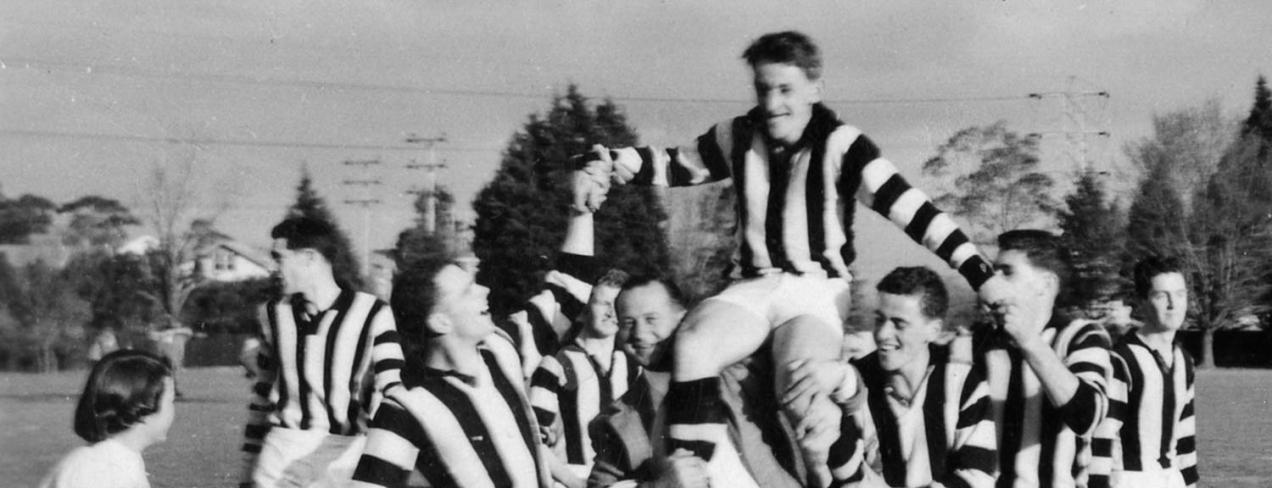
![Leo Gamble captain of the Mentone CYMS team, being 'chaired' off after a semi-final win in 1957 [picture].](https://localhistory.kingston.vic.gov.au/sites/default/files/styles/modal_image/public/photos/K007228_3.jpg?itok=Y4yVUE9e)